Companion
Watch
The history behind each chapter, in animated documentaries
122 videos on the people, places and events the book visits, from the fall of Baghdad and the Bronze Age collapse to Caesar and Pompey, the Inca at Cajamarca and Constantinople in 1453. Each video sits in the chapter that tells its story, numbered in the order the chapter tells it, so you can watch a chapter straight through. Each card opens the video on YouTube.
Every video here was made by Kings and Generals and plays on its YouTube channel. This site is not affiliated with Kings and Generals.
Prologue
The Account
3 videos in watch order
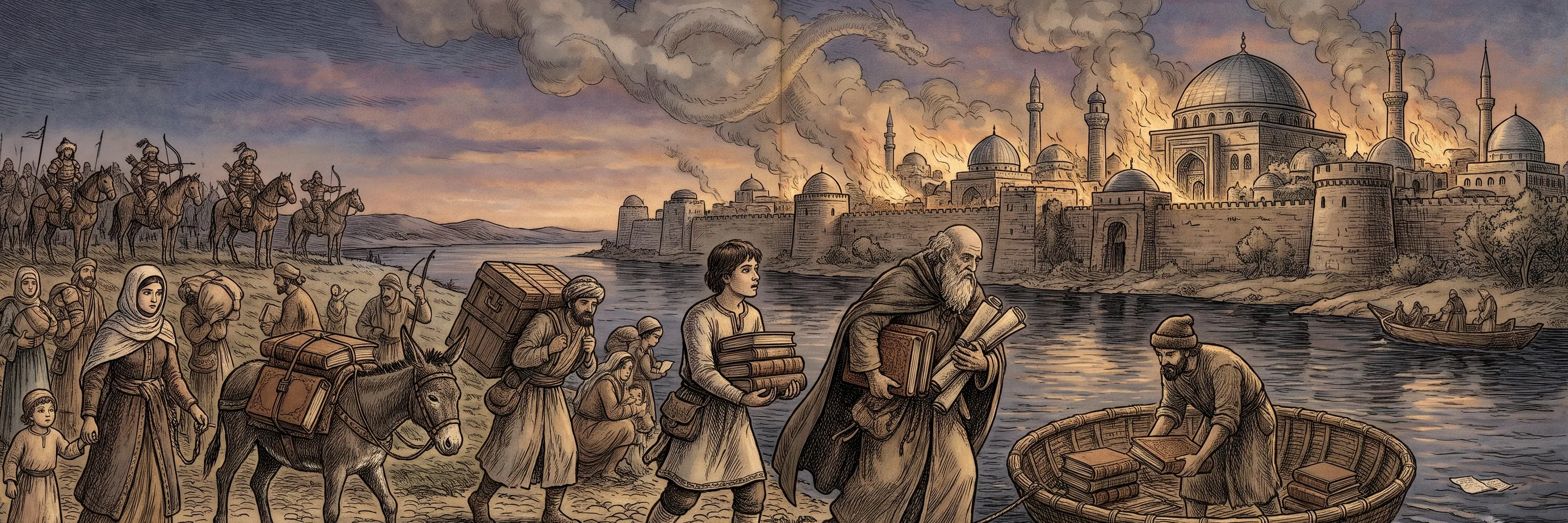
Baghdad, 1258. In February 1258 the Mongol army took Baghdad, the Abbasid capital, and its libraries burned. People carried out what books they could. Full size
The Mongol sack of Baghdad, 1258
 1Mongols: Zenith of Empire - Siege of Baghdad 1258 and Battle of Ain Jalut 1260 DOCUMENTARYHulagu's siege and sack of Baghdad in 1258, then the Mamluk stand at Ain Jalut.Series: Mongols
Also in Chapter 7, Chapter 12, Chapter 13, Chapter 16, Chapter 26
Abbasid Baghdad, the City of Peace
 2Medieval Baghdad: Rise and Fall of the City of Peace - DOCUMENTARYBaghdad from its founding by the Abbasids to its destruction by the Mongols.
Also in Chapter 7, Chapter 8, Chapter 10, Chapter 13, Chapter 16, Chapter 25, Chapter 26
Science in the Islamic Golden Age
 3Islamic Golden Age: Scientific Method DOCUMENTARYScholars of the Abbasid world and the beginnings of experimental science.Series: Islamic Golden Age
Also in Chapter 10, Chapter 16, Chapter 25
Also on this chapter's history: Islamic Golden Age - Philosophy and Humanities (Chapter 13, no. 6).
Chapter 1
Red on the Snow
8 videos in watch order
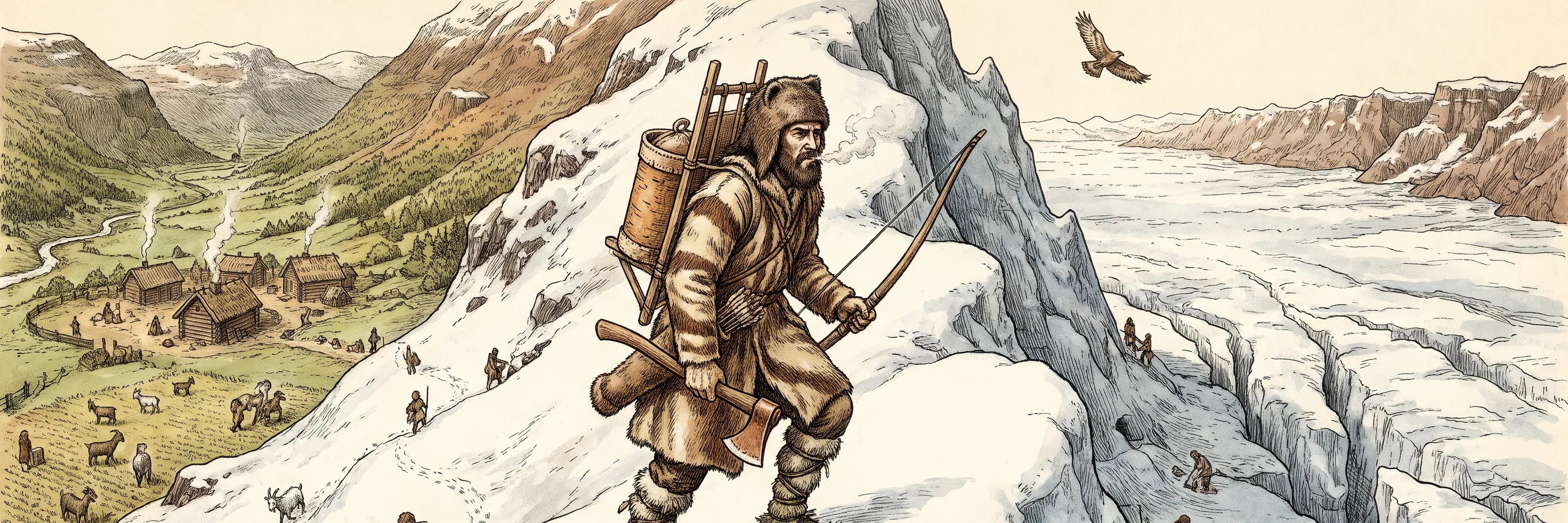
The man on the pass. About 5,300 years ago a man climbed into the Ötztal Alps with a copper axe, a longbow and a quiver of arrows. His body came out of the glacier ice in 1991. Full size
Sargon and the Akkadian Empire
 1Rise and Fall of the Akkadian EmpireSargon of Akkad builds the first empire over the Sumerian cities, and it collapses.
Also in Chapter 19
Xenia, the Greek law of hospitality
 2Ancient Law That Created the Greek Mediterranean World - Zeus' LawXenia, the sacred Greek law of hospitality to strangers, and how it bound together the Greek Mediterranean.
The Late Bronze Age collapse
 3Did the Bronze Age Really Collapse? Ancient History DOCUMENTARYThe trade and diplomatic network of the Late Bronze Age Mediterranean and the debate over how it collapsed.
Also in Chapter 4
The Greek Dark Ages
 4Did You Know Ancient Greece Had Its Dark Ages?Greece after the fall of the Mycenaean palaces: the lost Linear B script and the slow return of writing with the alphabet.
Also in Chapter 4
Genghis Khan and the Y chromosome
 5Is Genghis Khan Ancestor of the Millions?The genetic case for Genghis Khan's descendants among millions of living men.
Also in Chapter 22
The steppe migrations and the Indo-Europeans
 6Evolution of the Indo-European Languages - Ancient Civilizations DOCUMENTARYHow the Indo-European languages spread from the steppe across Europe and Asia.
Sudan's civil wars and the fall of El Fasher
 7Sudan’s Three Civil Wars ExplainedWhy every peace in Sudan since independence has broken down into war, through the RSF war and El Fasher.
Daily life and scribes in ancient Egypt
 8Daily Life of the Ancient Egyptians - Ancient Civilizations DOCUMENTARYWork, food, family and the scribes of everyday life along the Nile.
Also on this chapter's history: Rise of Sumer: Cradle of Civilization DOCUMENTARY (Chapter 2, no. 1); Did the Trojan War Really Happen? (Chapter 4, no. 5).
Chapter 2
The Agricultural Down Payment: The Crop That Fed the Scribes and Set a Woman’s Fate
4 videos in watch order
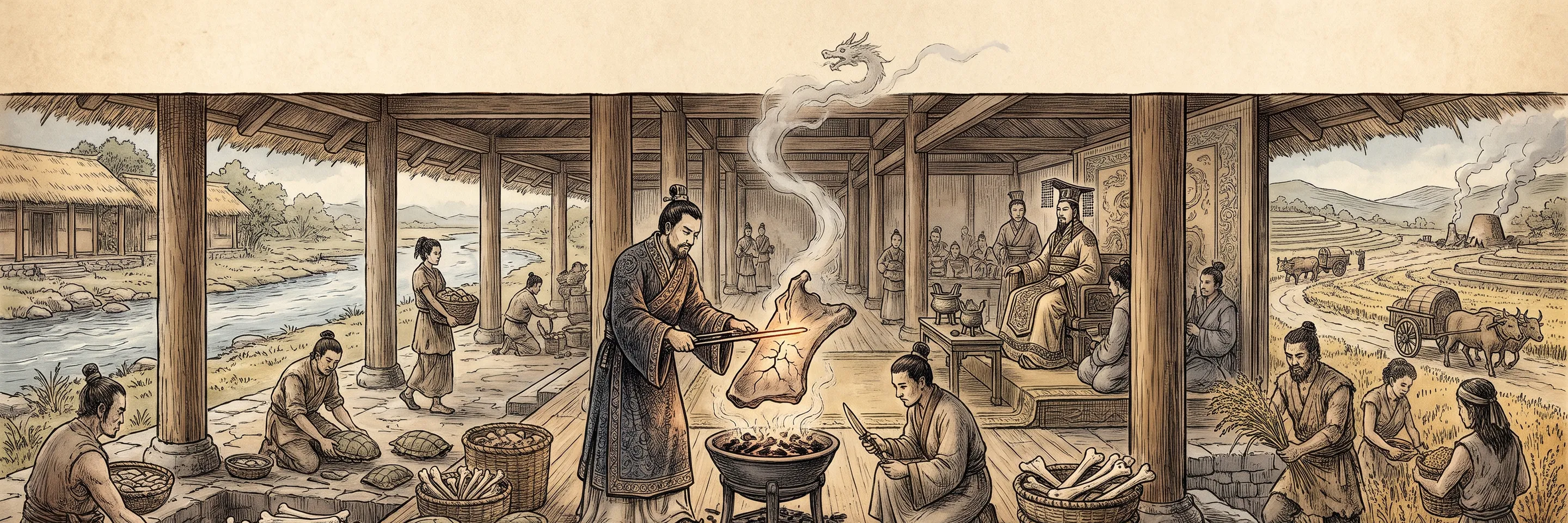
Asking the bones. Shang kings put their questions to heated ox bones and turtle shells, read the cracks, and had the answers cut into the bone, more than three thousand years ago. They are the oldest body of Chinese writing known. Full size
Uruk and the rise of Sumer
 1Rise of Sumer: Cradle of Civilization DOCUMENTARYSumer's first cities rise in southern Mesopotamia, with Uruk and its Eanna temple district at the center.
Shang China and the oracle bones
 2How Old Is Chinese Civilization? - Ancient Civilizations DOCUMENTARYThe Shang and Zhou dynasties and the oracle bones of early China.
Rice paddies and shared water
 3Subak - Balinese "Water Temples" and the Management of IrrigationBali's subak system, where water temples run the irrigation of the rice terraces.
Japan's women warriors
 4Japanese Warrior Women - Female Samurai DOCUMENTARYThe women warriors of Japan, from Tomoe Gozen onward.
Chapter 3
The Birthing Chair
4 videos in watch order
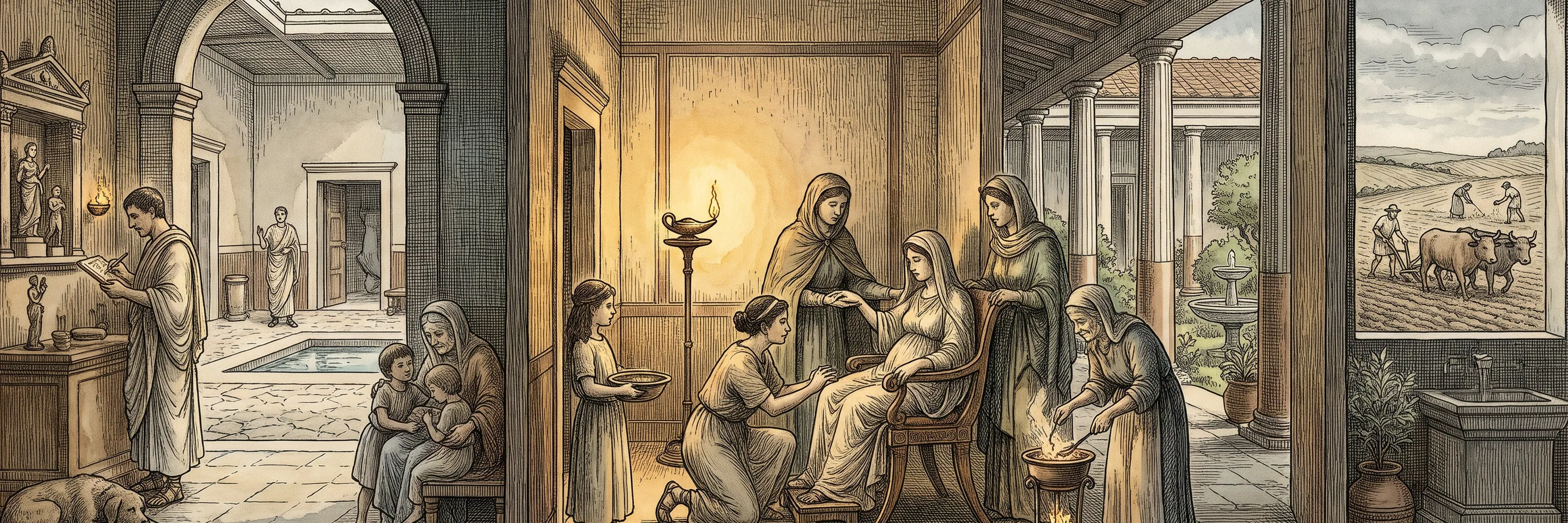
The birthing chair. In a Roman house the midwife delivered on a birthing chair while the women of the household held the mother. Outside, the fields were plowed with oxen. Full size
Caesar, Pompey and the end of the triumvirate
 1Caesar's Great Roman Civil War - How it all started - DOCUMENTARYHow the alliance of Caesar, Pompey and Crassus came apart.Series: Caesar's Civil War
Pompey's death in Egypt
 2Siege of Alexandria 48 BC - Caesar's Civil War DOCUMENTARYCaesar lands in Egypt after Pompey's murder and is besieged in Alexandria.Series: Caesar's Civil War
Crassus at Carrhae
 3Carrhae 53 BC - Roman–Parthian War DOCUMENTARYCrassus leads a Roman army to destruction against the Parthians at Carrhae.
The assassination of Julius Caesar
 4Assassination of Julius Caesar: Why and How DOCUMENTARYBrutus, Cassius and the conspirators kill the dictator Julius Caesar on the Ides of March, 44 BC.
Also in Chapter 8
Also on this chapter's history: Caesar's Civil War: The War Begins 49BC DOCUMENTARY (Chapter 8, no. 4); What Happened In Rome After Caesar's Assassination - Roman DOCUMENTARY (Chapter 8, no. 7).
Chapter 4
Those Who Bronze Together
18 videos in watch order
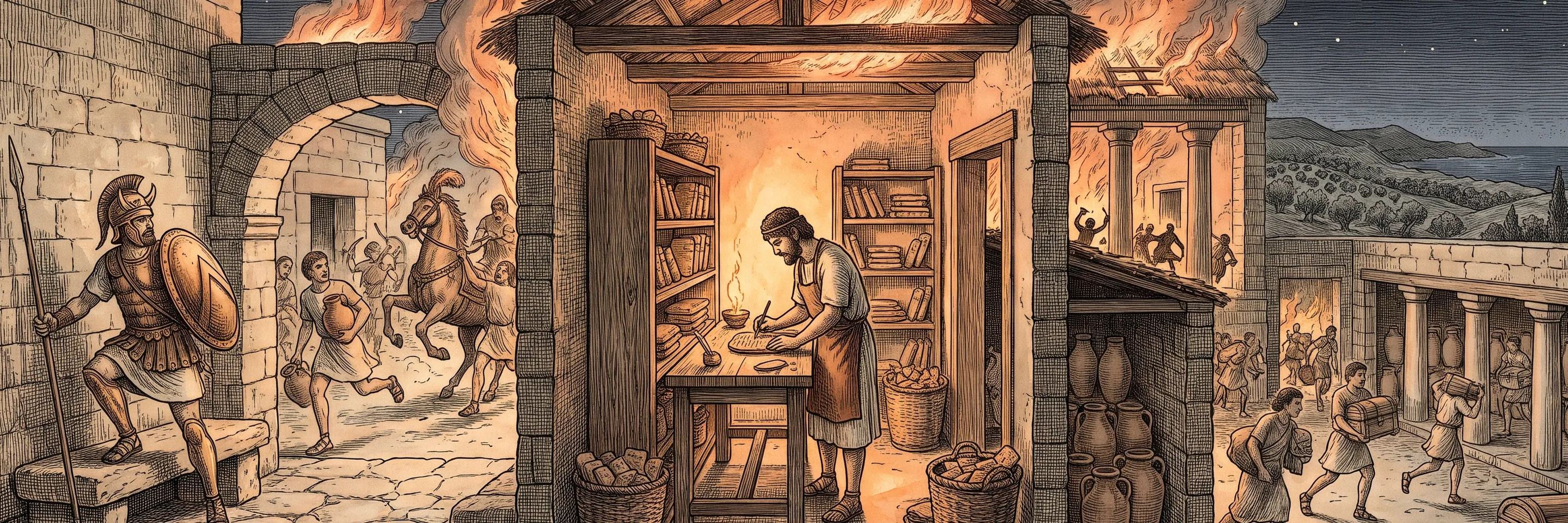
The archive at Pylos. Around 1180 BC the Palace of Nestor at Pylos burned. The fire baked its unfired clay tablets hard, and that is how they lasted. Full size
Show all 18 videosHide the videos
The Bronze Age collapse
 1Who Were The Sea Peoples? - Kings and Generals Bronze Age DOCUMENTARYWho the raiders Egypt called the Sea Peoples may have been.
The Bronze Age collapse
 2How did Ancient Egypt Survive the Bronze Age Collapse?How Ramesses III held Egypt together while the Bronze Age world fell.
The Bronze Age collapse
 3Were the Sea Peoples Actually Greek? Did Greeks Destroy the Bronze Age?The case for and against the Sea Peoples being Mycenaean Greeks.
Mycenaean Greece
 4Mycenae - What do we know about it? Bronze Age Greece DOCUMENTARYWhat archaeology tells us about Mycenae and the palace kingdoms of Bronze Age Greece.
Homer and the Bronze Age
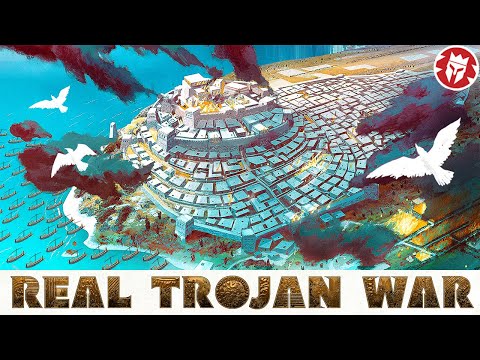 5Did the Trojan War Really Happen?The archaeology of Troy and the Bronze Age world behind the Iliad.
Homer and the Bronze Age
 6Odysseus: Historicity, Inspirations and Themes from Ancient GreeceWhat history may sit behind Odysseus and the Odyssey.
Phoenician Tyre and Carthage
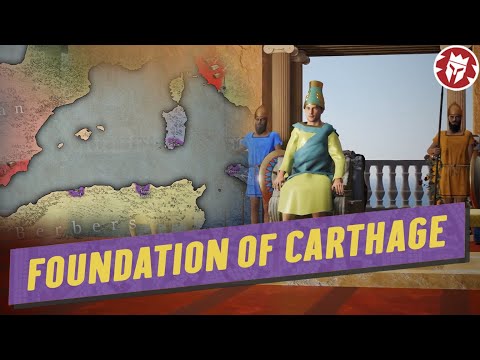 7Foundation of Carthage - Ancient Civilizations DOCUMENTARYPhoenician Tyre founds Carthage on the North African coast.
Philip and Alexander
 8Armies and Tactics: Philip II and Macedonian PhalanxThe Macedonian army Philip II built and Alexander inherited.
Philip and Alexander
 9Diplomatic Genius of Philip of MacedonHow Philip II made Macedon the master of Greece.
Philip and Alexander
 10Alexander’s Impossible Conquest ExplainedWhy Alexander could topple the Persian Empire: Philip's legacy, Persian weakness and Macedonian arms.
Philip and Alexander
 11Alexander the Great - All Battles and Conquests EXPLAINED in 6 HoursEvery battle and campaign of Alexander, in six hours.
Philip and Alexander
 12Alexander the Great's Conquest - Balkan Campaign 335 BCAlexander secures the Danube frontier, then destroys Thebes, 335 BC.
Alexandria and its Library
 13Alexandria: The Cultural Heart of Ancient Egypt, One of the Seven WondersAlexander's city in Egypt, its lighthouse, Museum and Library.
Philip and Alexander
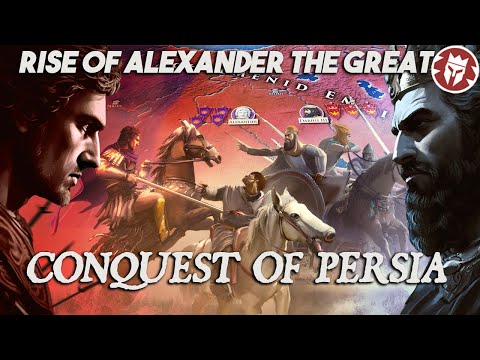 14Alexander of Macedon - Conquest of Persia - Ancient History DOCUMENTARYAlexander's war against Darius III, from the Granicus to Persepolis.
The end of Ptolemaic Egypt
 15Battle of Alexandria 30 BC - End of Antony and Cleopatra 4K DOCUMENTARYOctavian takes Alexandria in 30 BC, ending the reign of Antony and Cleopatra.
Alexander's successors
 16Babylonian War - Diadochi Wars Continue - Ancient History DOCUMENTARYSeleucus fights Antigonus for Babylon and the eastern satrapies, 311 to 309 BC.Series: Diadochi Wars
Alexander's successors
 17How the Diadochi Wars Ended - Successors of Alexander End His EmpireThe last wars among Alexander's successors and the settling of the Hellenistic kingdoms.Series: Diadochi Wars
Alexander's successors
 18Sad End of Alexander's Empire - Diadochi Wars - Every Battle, Full StoryThe wars of Alexander's successors and the breakup of his empire.Series: Diadochi Wars
Also on this chapter's history: Did the Bronze Age Really Collapse? Ancient History DOCUMENTARY (Chapter 1, no. 3); Did You Know Ancient Greece Had Its Dark Ages? (Chapter 1, no. 4); What was lost when the Library of Alexandria burned? - DOCUMENTARY (Chapter 8, no. 12).
Chapter 5
What the Genome Actually Says
2 videos in watch order
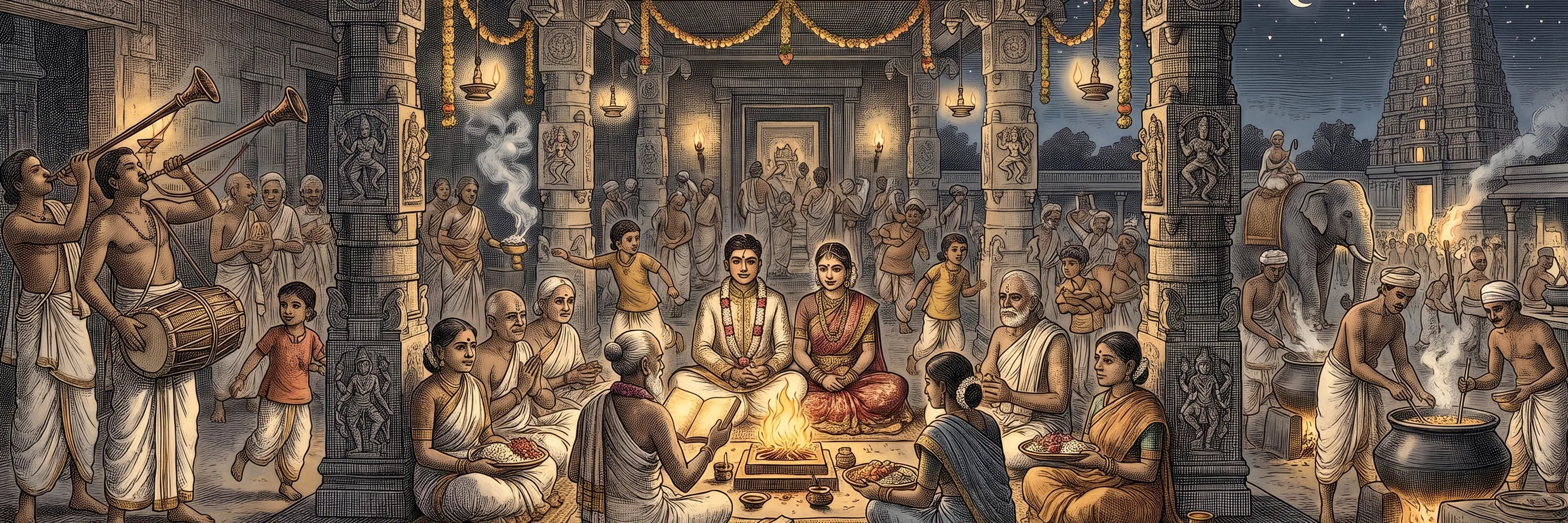
A temple wedding. A wedding in a south Indian temple courtyard around the turn of this century, lit by oil lamps under carved granite pillars. Full size
The Indo-Aryan migration into South Asia
 1Did the Aryan Invasion Actually Happen? Ancient Civilizations DOCUMENTARYThe evidence for and against an Indo-Aryan migration into India.
Jewish life in the medieval Islamic world
 2How Did the Jews Live in the Early Caliphate? History of ReligionsHow Jews lived, traded and practiced medicine and law under the early caliphates.
Chapter 6
The Spoken Word, Its Magic and Misery
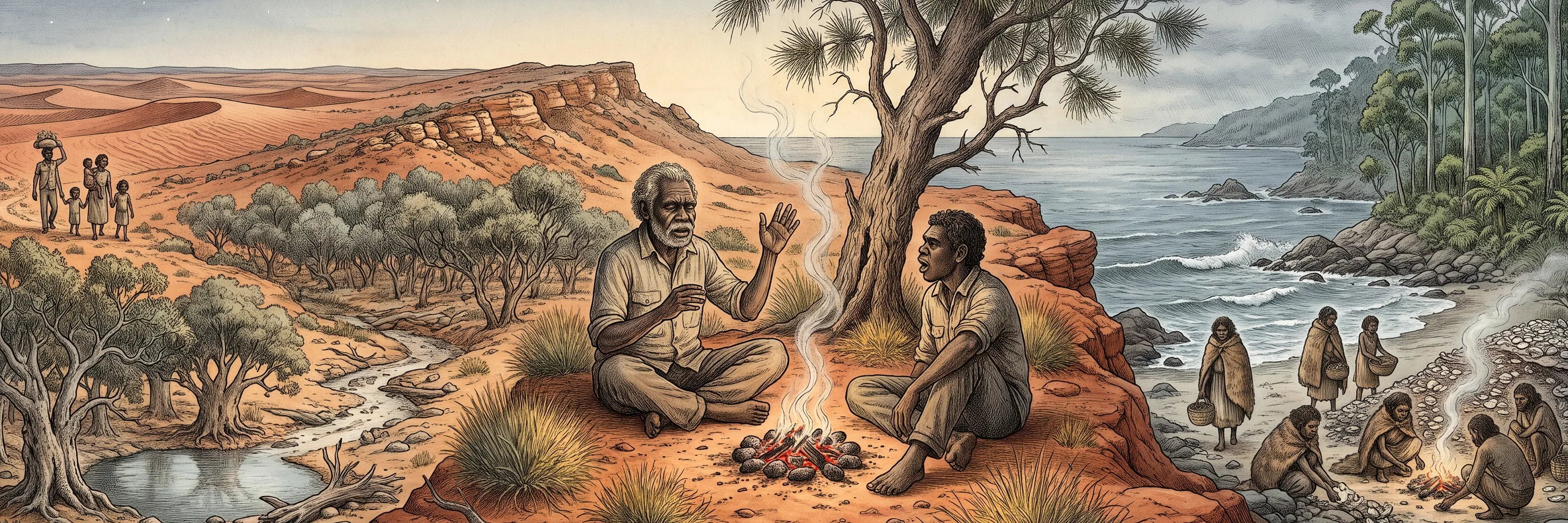
Singing the country. In the Western Desert a songline carries the country in song, each phrase a stretch of ground, and an elder teaches it one verse at a time. On Tasmania, cut off by the rising sea about twelve thousand years ago, a few thousand people lived on as their bone tools and fishing fell away. Full size
Kings and Generals has no video yet on the history this chapter tells.
Chapter 7
The New World Meets the ‘Civilized World’
8 videos in watch order
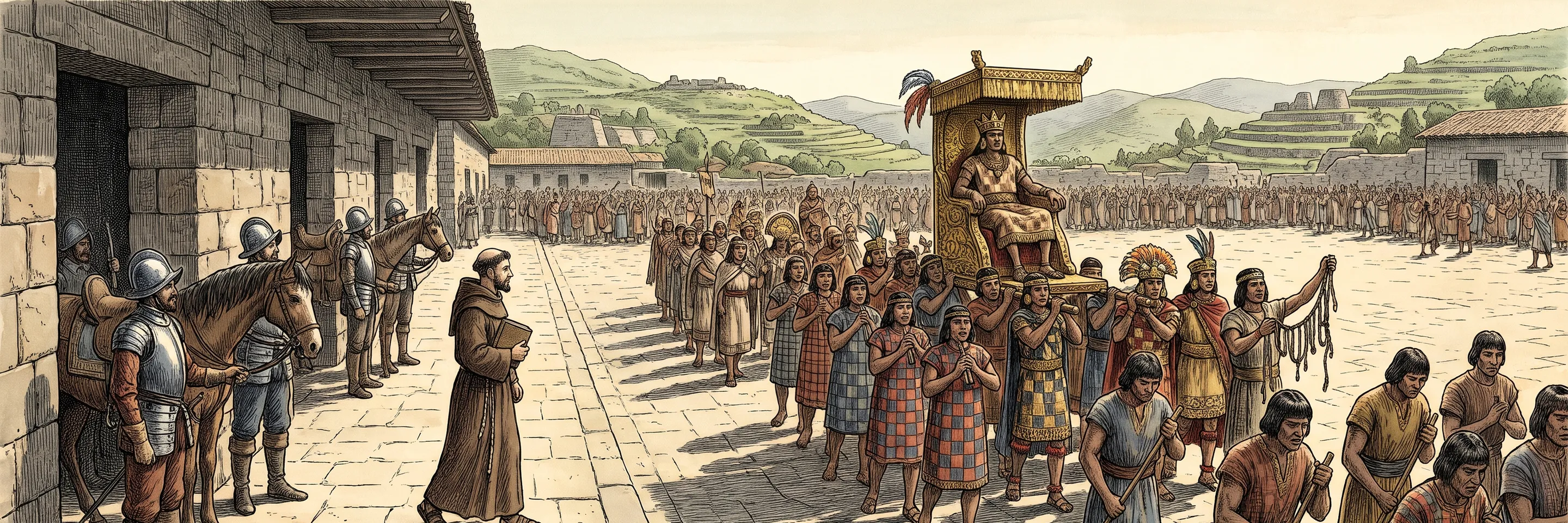
Cajamarca, 1532. On November 16, 1532, the Inca ruler Atahualpa was carried into the square at Cajamarca, where Pizarro's men waited in the buildings around it. Full size
The Inca Empire
 1Peak of the Incan EmpireThe Inca empire at its height under Huayna Capac.Series: Inca Empire
The Inca and Cajamarca
 2Spanish Conquest of the Incan EmpirePizarro captures Atahualpa at Cajamarca and the Spanish take the Inca empire.Series: Inca Empire
Cortés and the Aztecs
 3Aztecs: Arrival of Cortes and the ConquistadorsCortés lands in Mexico and reaches Moctezuma's capital.Series: Aztecs
Cortés and the Aztecs
 4Fall of Tenochtitlan (1521) - Spanish-Aztec War DOCUMENTARYThe siege and fall of the Aztec capital in 1521.Series: Aztecs
The Inca Empire
 5History of the Inca Empire DOCUMENTARYThe Inca from their origins to the Spanish conquest.
The Maya
 6Rise of the MayaHow the Maya city-states rose across the lowlands of Mesoamerica, with their writing, calendar and astronomy.
The Comanche
 7Comanches - A Nomadic Empire on the American PlainsHow the Comanche built a horse empire across the southern Plains.
The Mongols take Baghdad and end the Song
 8Mongols: Civil Wars and Conquest of China - Battle of Yamen 1279 DOCUMENTARYKublai Khan's wars and the final destruction of the Song at Yamen, 1279.Series: Mongols
Also on this chapter's history: Mongols: Zenith of Empire - Siege of Baghdad 1258 and Battle of Ain Jalut 1260 DOCUMENTARY (Prologue, no. 1); Medieval Baghdad: Rise and Fall of the City of Peace - DOCUMENTARY (Prologue, no. 2); Islamic Golden Age - Philosophy and Humanities (Chapter 13, no. 6).
Chapter 8
The Scribe’s Advantage
12 videos in watch order
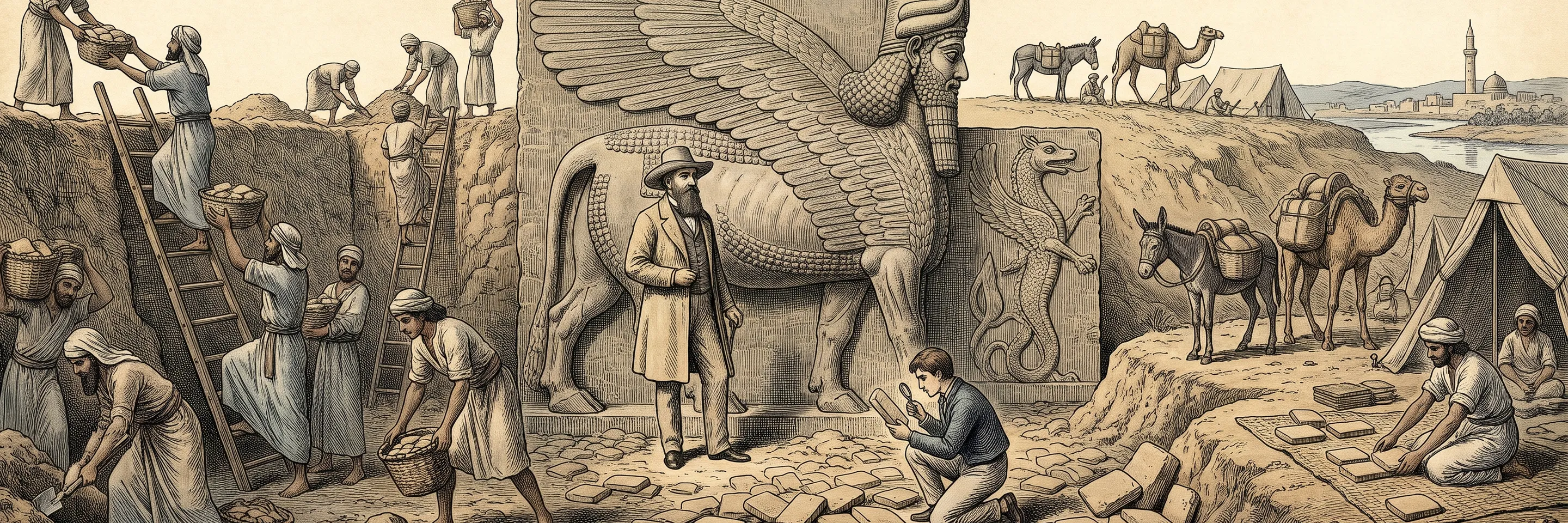
Kouyunjik, 1847. In 1847 Austen Henry Layard began digging the mound of Kouyunjik at Nineveh. The palace rooms his workmen opened there held some of the tablets of Ashurbanipal's library. Full size
Show all 12 videosHide the videos
The Library of Ashurbanipal
 1Seven Other Wonders of the Ancient World - Historical 3D DOCUMENTARYLesser-known ancient wonders, among them the Library of Ashurbanipal at Nineveh and the Great Library of Alexandria.
Mansa Musa's Hajj
 2Was Mansa Musa the Wealthiest Person Who Ever Lived?Mansa Musa of Mali and his famous pilgrimage to Mecca.
Fall of the Roman Republic
 3Mos Maiorum: What led to the fall of the Roman Republic?How the Republic's unwritten customs broke down.
Caesar's Civil War
 4Caesar's Civil War: The War Begins 49BC DOCUMENTARYCaesar crosses the Rubicon in 49 BC and Pompey abandons Italy.Series: Caesar's Civil War
Also in Chapter 3
Caesar's Civil War
 5Caesar against Pompey - Great Roman Civil War DOCUMENTARYCaesar against Pompey: the Great Roman Civil War told campaign by campaign.Series: Caesar's Civil War
Caesar's Civil War
 6How Caesar Won the Great Roman Civil War - Animated DOCUMENTARYCaesar's war against Pompey and the Senate, from the Rubicon in 49 BC to Munda in 45 BC.Series: Caesar's Civil War
Cicero's Rome
 7What Happened In Rome After Caesar's Assassination - Roman DOCUMENTARYRome in the weeks after the Ides of March, from the funeral to Octavian's arrival.Series: Post-Caesar Civil Wars
Also in Chapter 3
Cicero's Rome
 8Post-Caesar Civil Wars - Battle of Mutina - Roman History DOCUMENTARYThe war of Mutina in 43 BC, when the Senate sent Octavian against Antony.Series: Post-Caesar Civil Wars
Death of Cicero
 9Octavian and Antony: the Monsters - Post-Caesar Civil Wars DOCUMENTARYThe proscriptions of 43 BC, in which Cicero was hunted down near Formiae and killed.Series: Post-Caesar Civil Wars
Cicero's Rome
 10Rise of Augustus - Post Caesar RomeOctavian, Antony and Lepidus form the Second Triumvirate and its proscriptions.Series: Post-Caesar Civil Wars
The Medici of Florence
 11Rise and Fall of the Medici Dynasty - Renaissance History DOCUMENTARYThe Medici bank and the family that ruled Renaissance Florence.
Also in Chapter 13
The Library of Alexandria
 12What was lost when the Library of Alexandria burned? - DOCUMENTARYWhat the Library of Alexandria held and how it was lost.
Also in Chapter 4
Also on this chapter's history: Medieval Baghdad: Rise and Fall of the City of Peace - DOCUMENTARY (Prologue, no. 2); Rise of Sumer: Cradle of Civilization DOCUMENTARY (Chapter 2, no. 1); Assassination of Julius Caesar: Why and How DOCUMENTARY (Chapter 3, no. 4); Did the Trojan War Really Happen? (Chapter 4, no. 5).
Chapter 9
The Dragon Learns to Take a Test
1 video
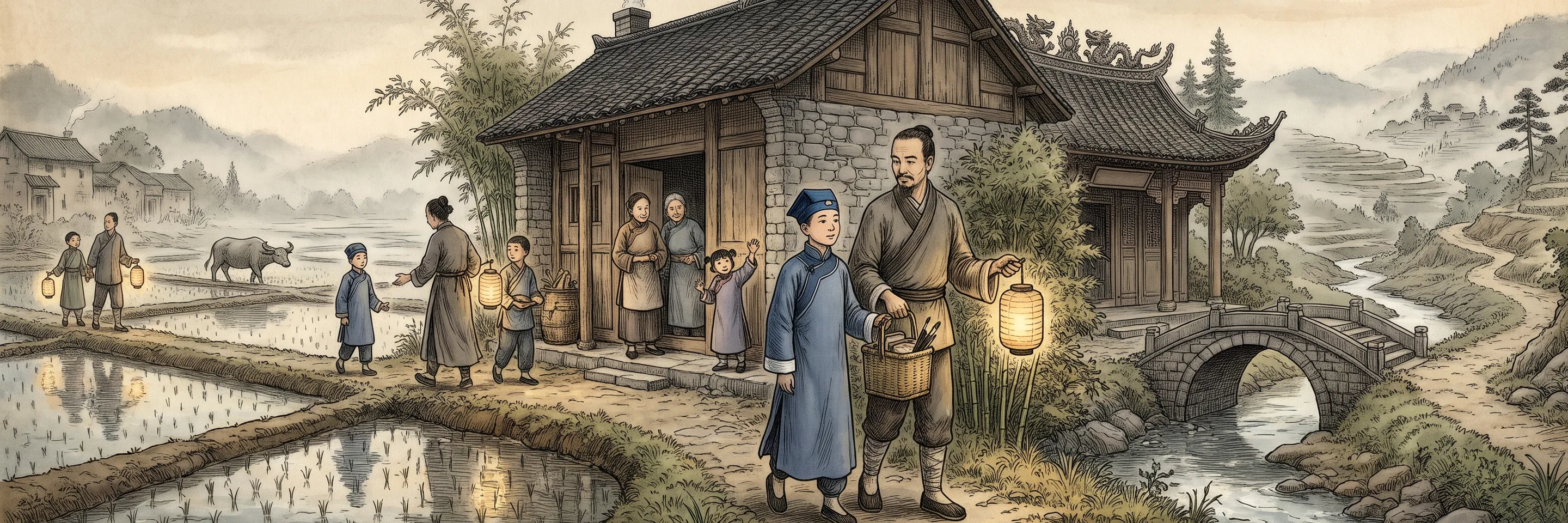
Examination morning. In the late Qing a village boy set out before dawn for the county examination with his brushes, ink stone and food. It was the first of the tests that led, for very few, to office. Full size
Chapter 10
Caste and Calculus
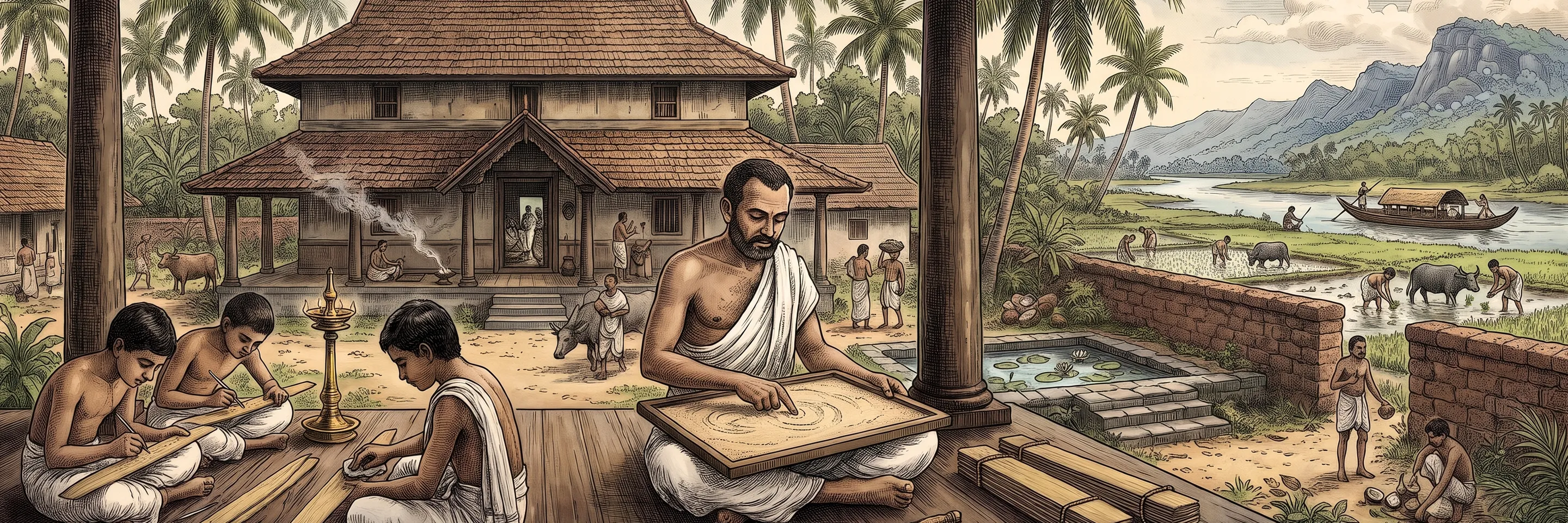
The veranda at Trkkantiyur. Around 1490, on the veranda of his family's house on the Malabar Coast, Nilakantha Somayaji worked on a sand board and cut his results into palm leaves, among them a series for pi that Europe would publish nearly two centuries later. Full size
This chapter's history is told in videos placed with other chapters: Medieval Baghdad: Rise and Fall of the City of Peace - DOCUMENTARY (Prologue, no. 2); Islamic Golden Age: Scientific Method DOCUMENTARY (Prologue, no. 3).
Chapter 11
A River in Chains
10 videos in watch order
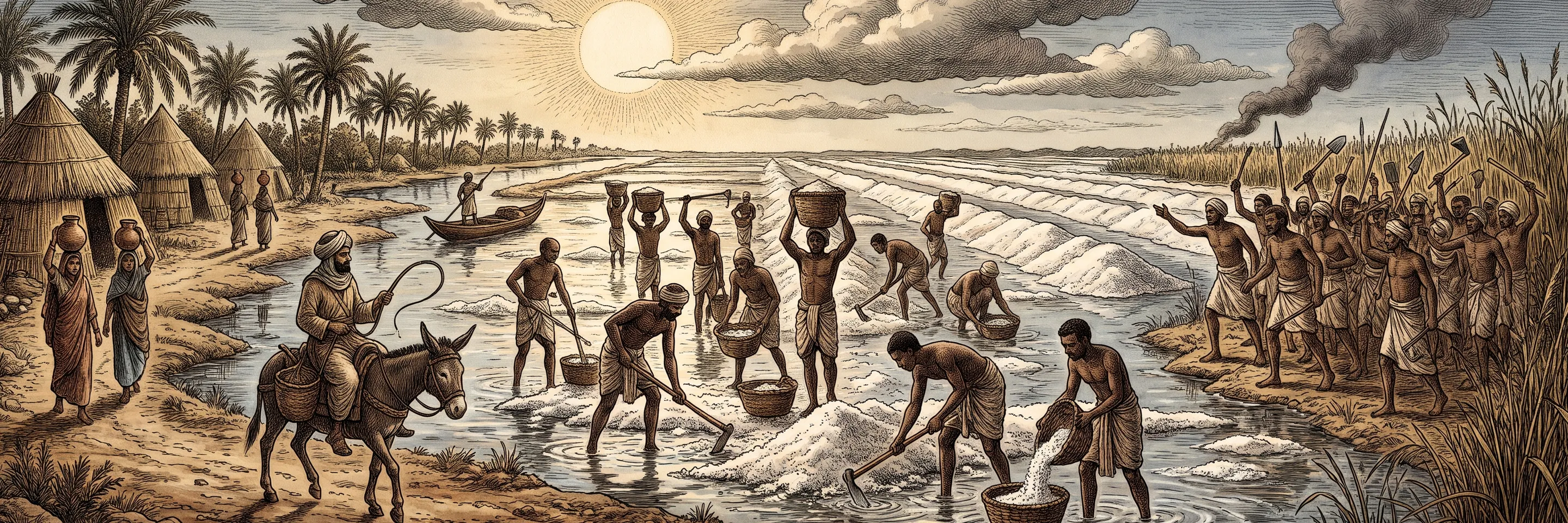
The salt flats of Basra. In ninth-century southern Iraq enslaved East Africans, the Zanj, were set to scraping salt crust off the marshes to make farmland. In 869 they rose in a revolt that lasted fourteen years. Full size
Show all 10 videosHide the videos
Roman slavery and its decline
 1How Europe Transitioned from Slavery to Serfdom - Middle Ages DOCUMENTARYHow slavery in the Roman world, counted in the millions, gave way to medieval serfdom.
Slavery in the early caliphates
 2Slavery in the Early Caliphate - Medieval History DOCUMENTARYHow slavery worked in the early Islamic caliphates.
The Zanj Rebellion
 3Zanj Rebellion - Slave rebellion against the Abbasid Caliphate DOCUMENTARYThe revolt of enslaved East Africans in southern Iraq, 869 to 883.Series: Zanj Rebellion
The Zanj Rebellion
 4The Largest Slave Rebellion Against the Caliphate - ANIMATED HISTORYThe revolt of enslaved East Africans in southern Iraq, 869 to 883, told in a newer film.Series: Zanj Rebellion
The devshirme and the Janissaries
 5The Rise of the Janissaries: Ottoman Military RevolutionHow the Ottomans built the Janissary corps from levied Christian boys.
Also in Chapter 13
The devshirme and the Janissaries
 6Elite Guard of the Ottoman Sultans - the JanissariesThe Janissaries, their recruitment, training and power.
Also in Chapter 13
Slavery and the American Civil War
 7How Slavery Caused the American Civil WarHow slavery drove the United States to civil war.
Slavery and the American Civil War
 8The Real Reason Behind the American Civil WarThe causes of the American Civil War, read from the sources.
Slavery and the American Civil War
 9How the American Civil War Happened - Road to the WarThe road to the American Civil War, from the founders' compromises over slavery to secession.
The Romani in Europe
 10From India to Europe: The Romani OdysseyThe Romani migration from India to Europe and its long history.
Chapter 12
The Stolen River
5 videos in watch order
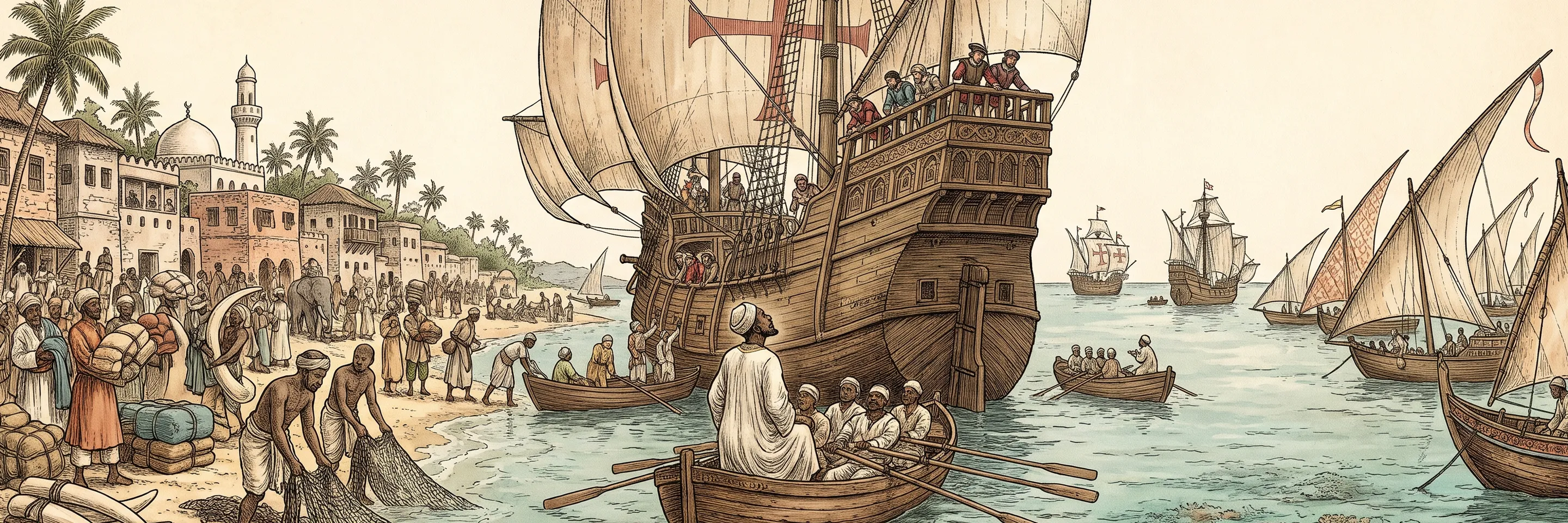
The pilot at Malindi. At Malindi in 1498 Vasco da Gama's ships took on a pilot who knew the monsoon route across the Indian Ocean to India. Full size
The Teutonic Order in Prussia
 1Structure of the Teutonic Order DOCUMENTARYHow the Teutonic Order was organized and governed in Prussia.Series: Teutonic Order
The Teutonic Order in Prussia
 2How the Teutonic Order Conquered Prussia - Military Orders DOCUMENTARYThe Teutonic Knights' long conquest of the pagan Prussians.Series: Teutonic Order
The Portuguese in the Indian Ocean
 3Ottoman-Portuguese War - Age of Colonization DOCUMENTARYThe opening rounds of the Ottoman-Portuguese wars.
The Ottoman conquest of Mamluk Egypt
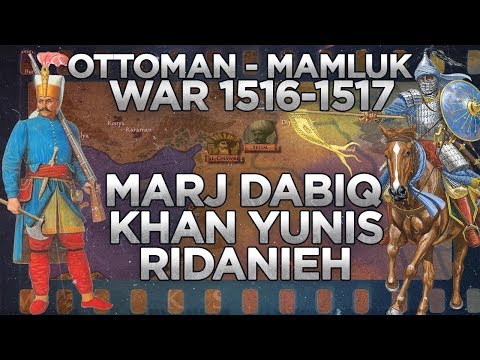 4Ottoman-Mamluk War of 1516-1517 DOCUMENTARYSelim I destroys the Mamluk Sultanate and takes Egypt.
The Ottoman conquest of Mamluk Egypt
 5The Battle That Changed the Middle East - Ottomans Broke the MamluksMarj Dabiq and Ridaniya, the battles that ended Mamluk rule.
Also on this chapter's history: Mongols: Zenith of Empire - Siege of Baghdad 1258 and Battle of Ain Jalut 1260 DOCUMENTARY (Prologue, no. 1).
Chapter 13
The Flight of the Dragon
6 videos in watch order
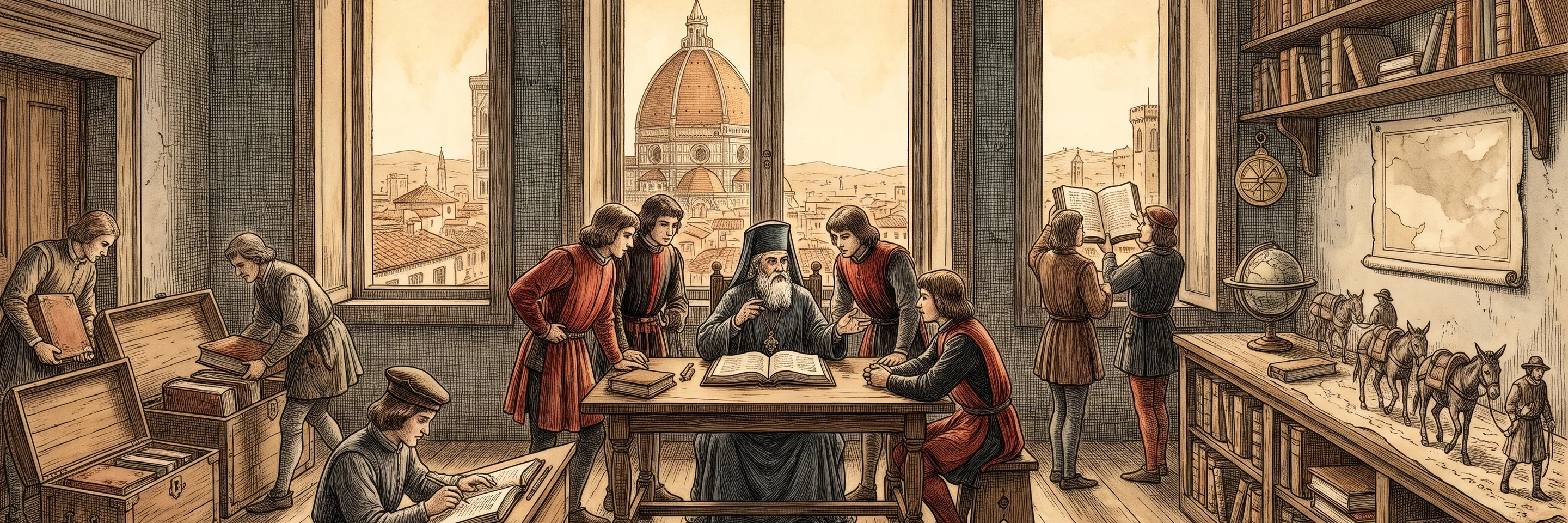
Greek in Florence. Greek scholars from Byzantium taught in Italian cities through the fifteenth century, before and after Constantinople fell in 1453, and brought chests of Greek manuscripts with them. Full size
The fall of Constantinople, 1453
 1Fall Of Constantinople 1453 - Ottoman Wars DOCUMENTARYThe siege of 1453 in the channel's original telling.
The fall of Constantinople, 1453
 2Fall of Constantinople 1453 - Ottoman Empire DOCUMENTARYMehmed II's siege and the end of the Byzantine Empire.
Byzantium and the Greek classics
 3Was the Byzantine Empire the Heir to the Ancient Greeks?How much of ancient Greece Byzantium kept.
Constantinople after the conquest
 4What Happened After the Fall of Constantinople in 1453? Ottoman HistoryThe Ottoman capital and the Byzantine world after the conquest.
Also in Chapter 20
Greek fire
 5Byzantine Navy: Greek Fire, Tactics, Ships - Medieval HistoryThe Byzantine navy: its ships, its tactics and the secret weapon of Greek fire.
The fall of Baghdad
 6Islamic Golden Age - Philosophy and HumanitiesPhilosophy and learning in the Abbasid caliphate.Series: Islamic Golden Age
Also in Prologue, Chapter 7, Chapter 16, Chapter 25
Also on this chapter's history: Mongols: Zenith of Empire - Siege of Baghdad 1258 and Battle of Ain Jalut 1260 DOCUMENTARY (Prologue, no. 1); Medieval Baghdad: Rise and Fall of the City of Peace - DOCUMENTARY (Prologue, no. 2); Rise and Fall of the Medici Dynasty - Renaissance History DOCUMENTARY (Chapter 8, no. 11); The Rise of the Janissaries: Ottoman Military Revolution (Chapter 11, no. 5); Elite Guard of the Ottoman Sultans - the Janissaries (Chapter 11, no. 6).
Chapter 14
Latin: A Republic of Letters Across Borders and Time
2 videos in watch order
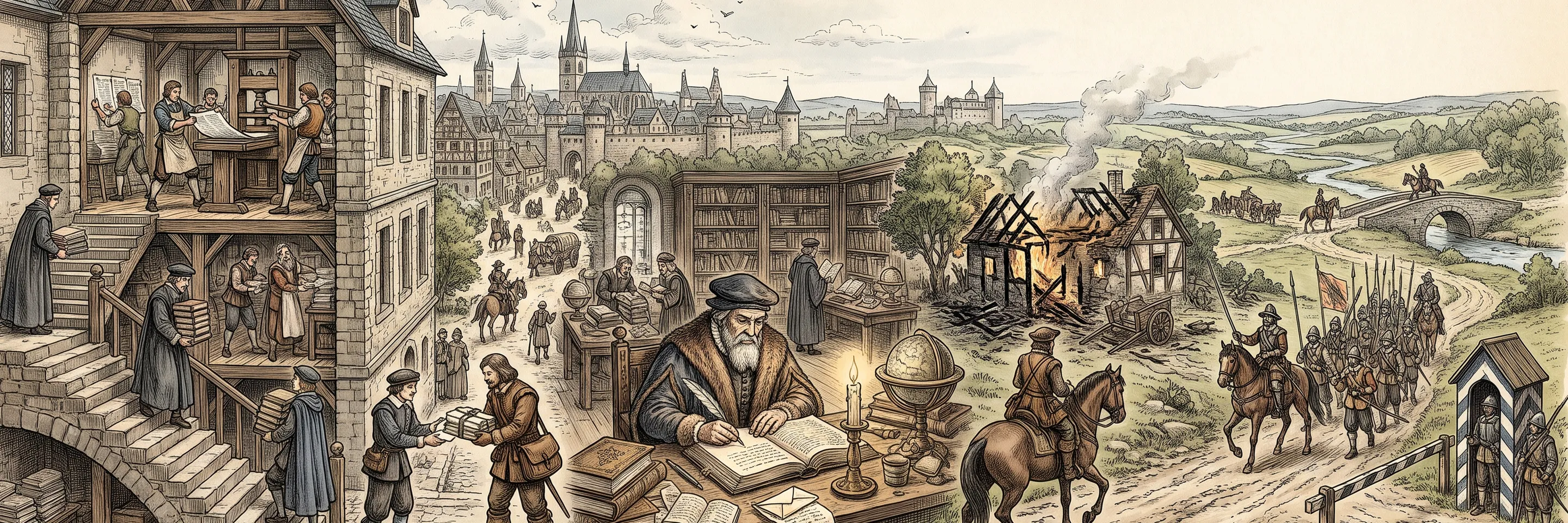
Letters in wartime. Through the Thirty Years' War, from 1618 to 1648, scholars went on writing to one another across Europe, and couriers carried the letters past the armies. Full size
The fragmented Holy Roman Empire
 1Why Was Germany so Fragmented in the Middle Ages - Medieval DOCUMENTARYWhy the Holy Roman Empire stayed a patchwork of princes, bishops and cities instead of becoming one kingdom.
The Thirty Years' War
 2Why the Thirty Years' War Was So Devastating - European Wars of ReligionWhy the war of 1618 to 1648 ruined Central Europe.
Also in Chapter 16
Chapter 15
Institutional Divergence
2 videos in watch order
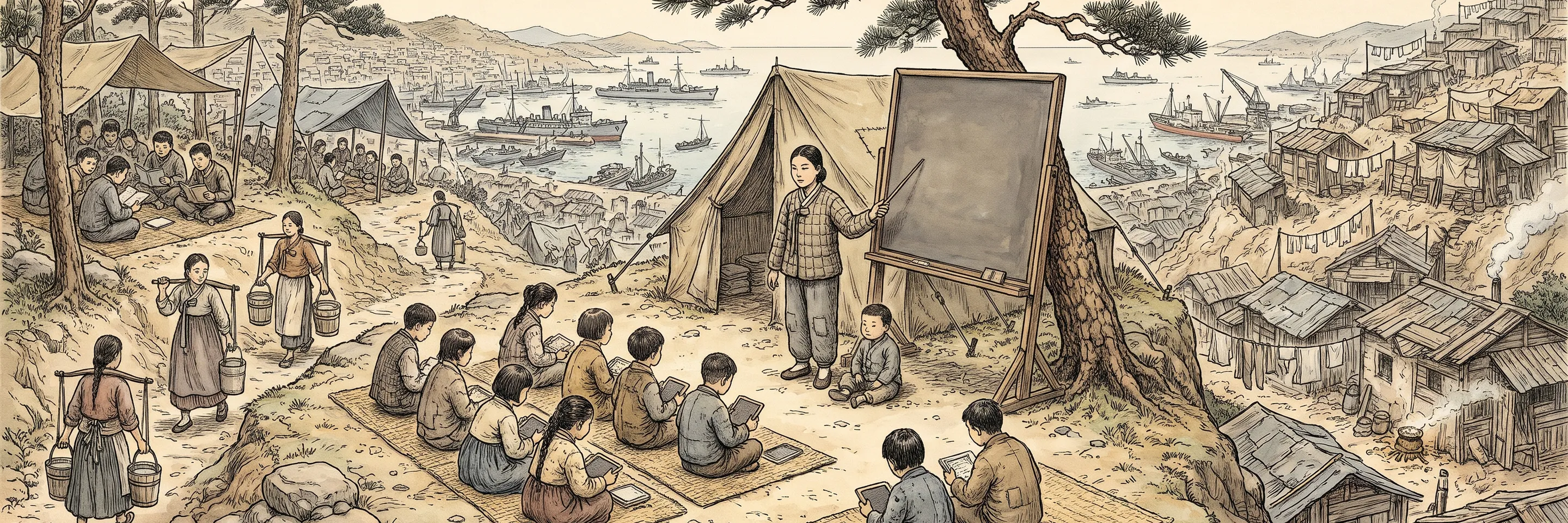
School on the hillside. During the Korean War refugees crowded into Busan, and schools met in tents and in the open air, the children on straw mats with slates on their knees. Full size
The retreat from Pyongyang, 1950
 1Korean War 1950-1953 - Chinese Intervention 1950 - COLD WAR DOCUMENTARYChina enters the Korean War and drives the UN armies back from the Yalu and out of North Korea.Series: Korean War
The Korean armistice of 1953
 2How the Korean War Ended - COLD WAR DOCUMENTARYThe armistice of 1953 and the divided peninsula it left.Series: Korean War
Chapter 16
The Gate and the Gatekeeper
1 video
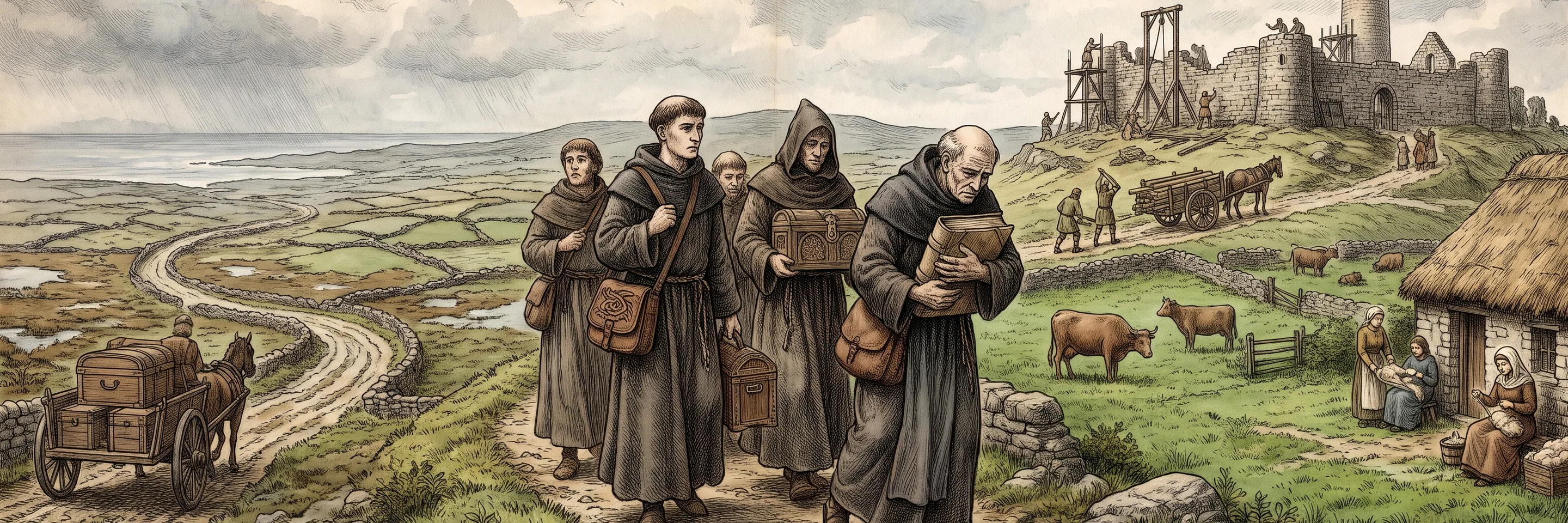
From Iona to Kells. After the Viking raids on Iona its monks moved inland to Kells in Ireland, where a new monastery went up from 807. They brought their books and relics with them. Full size
The Red Army in the Russian Civil War
 1Rise of the Red Army - Eastern Front Week-by-Week Prelude #2How the Bolsheviks built the Workers' and Peasants' Red Army in the Civil War and the 1920s.Series: Eastern Front Week-by-Week
Also on this chapter's history: Mongols: Zenith of Empire - Siege of Baghdad 1258 and Battle of Ain Jalut 1260 DOCUMENTARY (Prologue, no. 1); Medieval Baghdad: Rise and Fall of the City of Peace - DOCUMENTARY (Prologue, no. 2); Islamic Golden Age: Scientific Method DOCUMENTARY (Prologue, no. 3); Islamic Golden Age - Philosophy and Humanities (Chapter 13, no. 6); Why the Thirty Years' War Was So Devastating - European Wars of Religion (Chapter 14, no. 2).
Chapter 17
Challenge and Response
3 videos in watch order
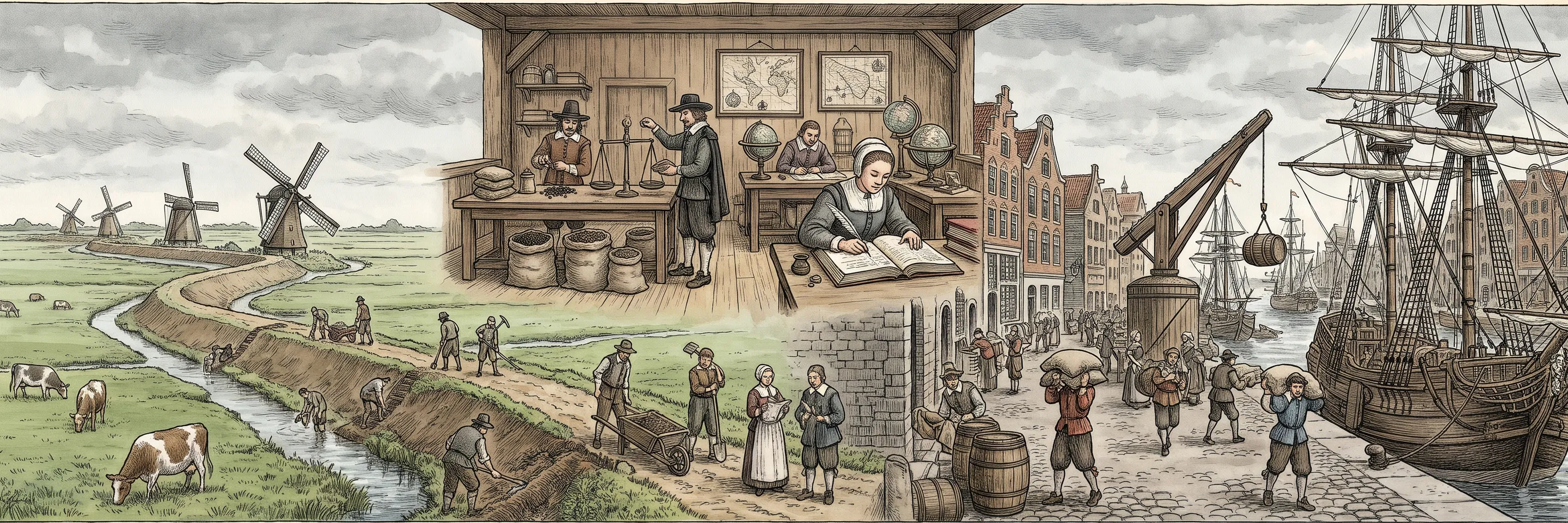
The Dutch Republic. In the seventeenth century the Dutch held back the sea with dykes and windmills, and East India Company ships brought spices home to Amsterdam to be weighed, sold and entered in the books. Full size
Morris Chang and TSMC
 1Taiwan's Chip Industry: Success Amid Geopolitical Tensions and AI-Era ProspectsHow Taiwan built TSMC and the world's leading chip industry.
Also in Chapter 26
The General Crisis of the seventeenth century
 2Why Were Things So Terrible In the 17th Century - General Crisis TheoryThe global crisis of the 1600s: cold, famine, war and revolt.
The Dutch East India Company
 3How the Dutch Colonized IndonesiaThe Dutch East India Company and the conquest of the Indonesian islands.
Chapter 18
The Deadweight Loss of Exclusion: Lost Einsteins
1 video
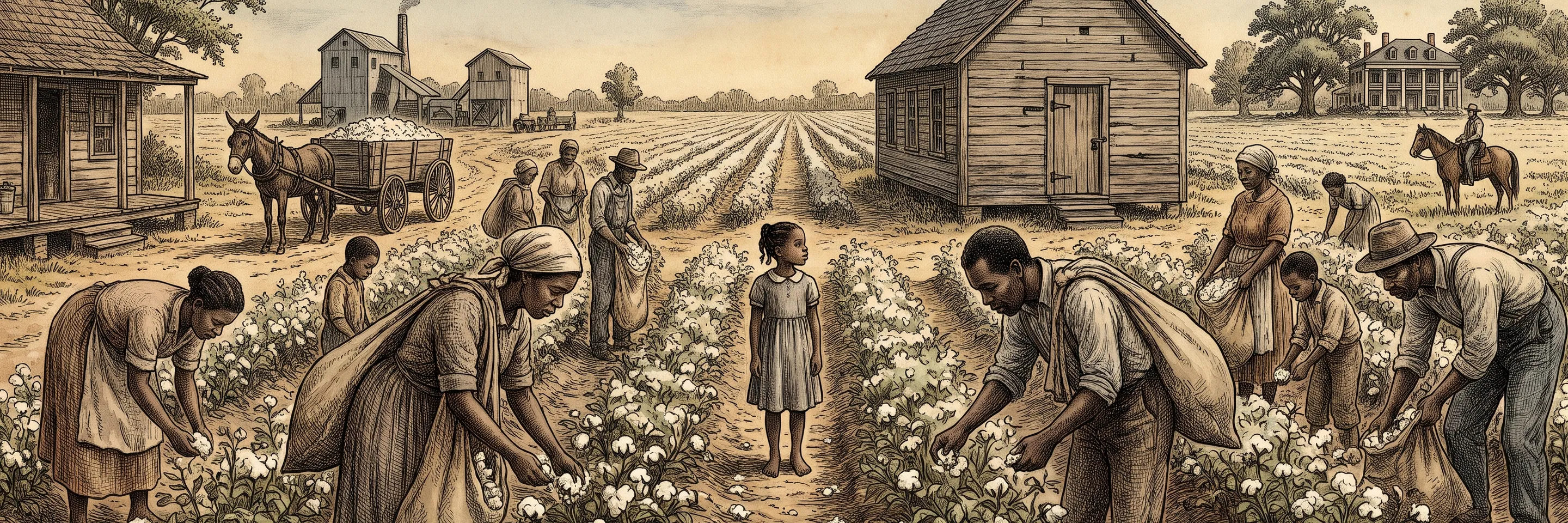
Picking season. In the Mississippi Delta in the 1930s sharecropping families picked cotton together, and children were kept out of school at picking time. Full size

Chapter 19
She’s Working 9 to 5, and Then Some
4 videos in watch order
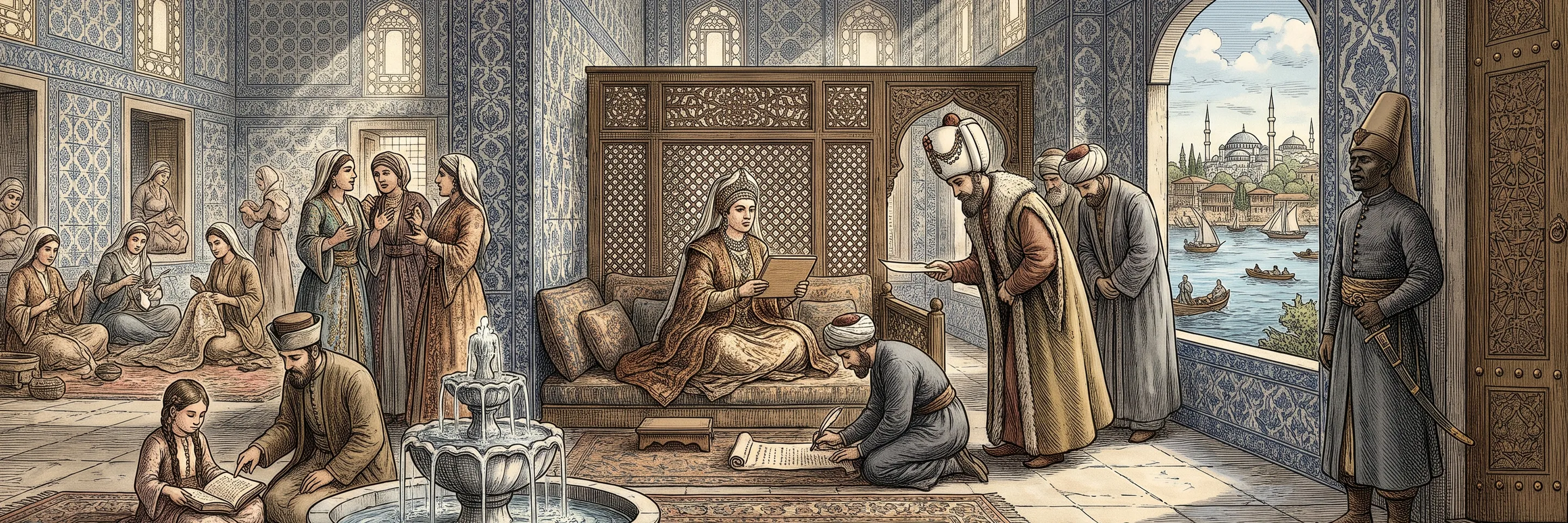
The valide sultan. In the early 1600s, the years called the Sultanate of Women, the sultan's mother could rule for a boy sultan, sending her orders to the grand vizier in writing. Full size
The Iranian Revolution
 1Why Iranian Revolution Happened - Kings and Generals ModernFrom the Pahlavi shahs to the revolution of 1979.
The Slavic slave trade
 2Slavic Slave TradeThe medieval and early modern trade in Slavic captives.
Ottoman succession and fratricide
 3Why did the Ottoman Sultans Kill their Brothers?Ottoman succession and the law of fratricide.
The Sultanate of Women
 4Sultanate of Women in the Ottoman Empire DOCUMENTARYThe era when Ottoman royal women shaped imperial politics.
Also on this chapter's history: Rise and Fall of the Akkadian Empire (Chapter 1, no. 1); Meiji Restoration Explained: Rise of Japan DOCUMENTARY (Chapter 21, no. 5); Was Napoleon a Military Tyrant or a Reformer? Kings and Generals Documentary (Chapter 23, no. 1).
Chapter 20
The Twentieth-Century Resets
2 videos in watch order
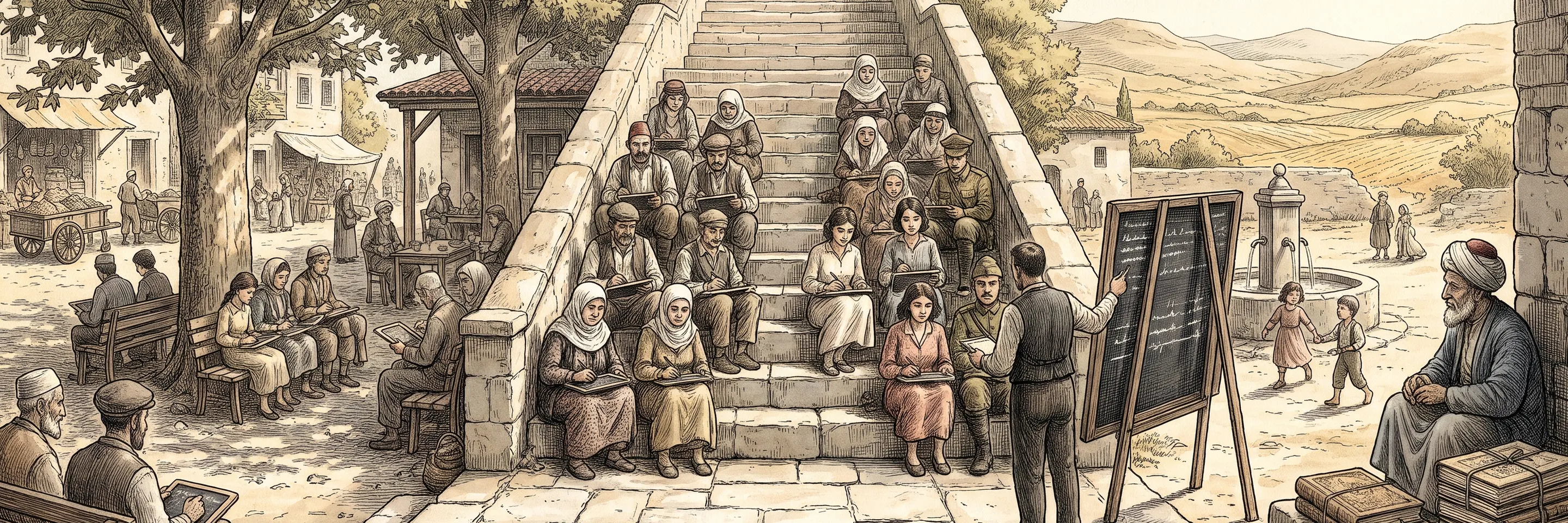
The new letters, 1928. In 1928 Turkey changed from the Arabic script to a Latin alphabet, and from the start of 1929 nation schools taught adults across the country to read and write it. Full size
The Mitsubishi Zero
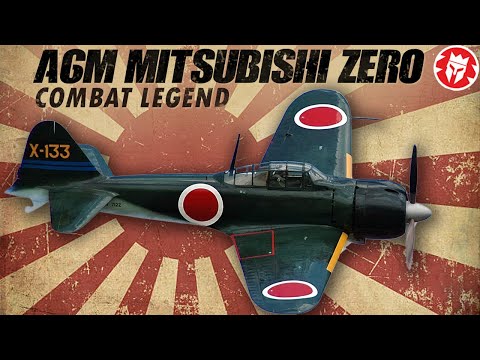 1Rise and Fall of Zero: A6M and Its Struggle for Pacific SupremacyThe Mitsubishi A6M Zero and its fight for the Pacific.
The Ottoman expansion after Mehmed II
 2How the Ottomans Became a Superpower and Tripled in SizeBayezid II and Selim I expand the Ottoman state, and Bayezid takes in the Jews expelled from Spain in 1492.
Also on this chapter's history: What Happened After the Fall of Constantinople in 1453? Ottoman History (Chapter 13, no. 4).
Chapter 21
The Summer of Civilization
5 videos in watch order
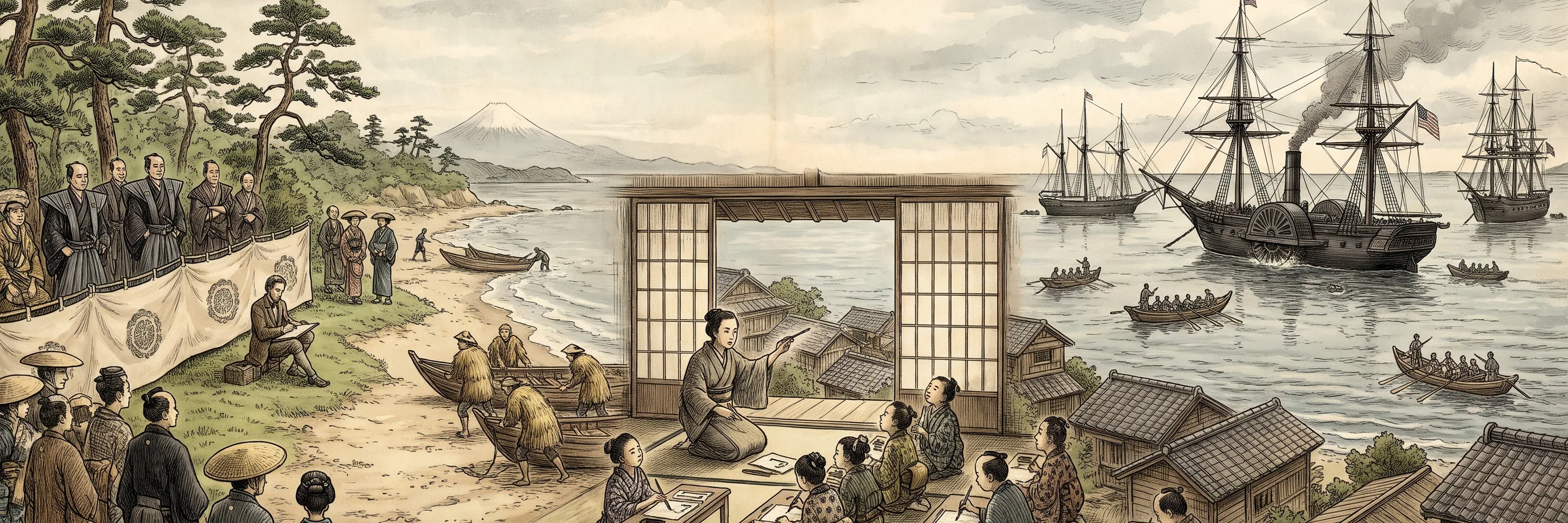
The black ships. In July 1853 Commodore Perry's four American warships, two of them steamers, anchored off Uraga. Japan already had thousands of village schools, the terakoya. Full size
Japan closed and opened
 1How Europeans Tried to End Japanese Isolation - Colonialism DOCUMENTARYTwo centuries of Tokugawa isolation, the Dutch at Dejima, and the foreign attempts to open Japan before Perry.
Japan closed and opened
 2What Was the Structure of Medieval Japan?- Guide to the Shogun TV ShowThe Edo social order: samurai, farmers, artisans and merchants, and those outside the four classes.
Japan closed and opened
 3Russo-Japanese War 1904-1905 - Battle of Tsushima DOCUMENTARYAdmiral Togo destroys the Russian Baltic Fleet at Tsushima, 1905.
Japan closed and opened
 4How the Meiji Restoration Turned Japan into an Empire - Pacific War #0.2The Meiji reforms that turned Japan into a modern military power, through the Russo-Japanese War.Series: Pacific War
Japan closed and opened
 5Meiji Restoration Explained: Rise of Japan DOCUMENTARYThe fall of the shogunate and Japan's rapid modernization.
Also in Chapter 19
Chapter 22
The Student and the Teacher
14 videos in watch order
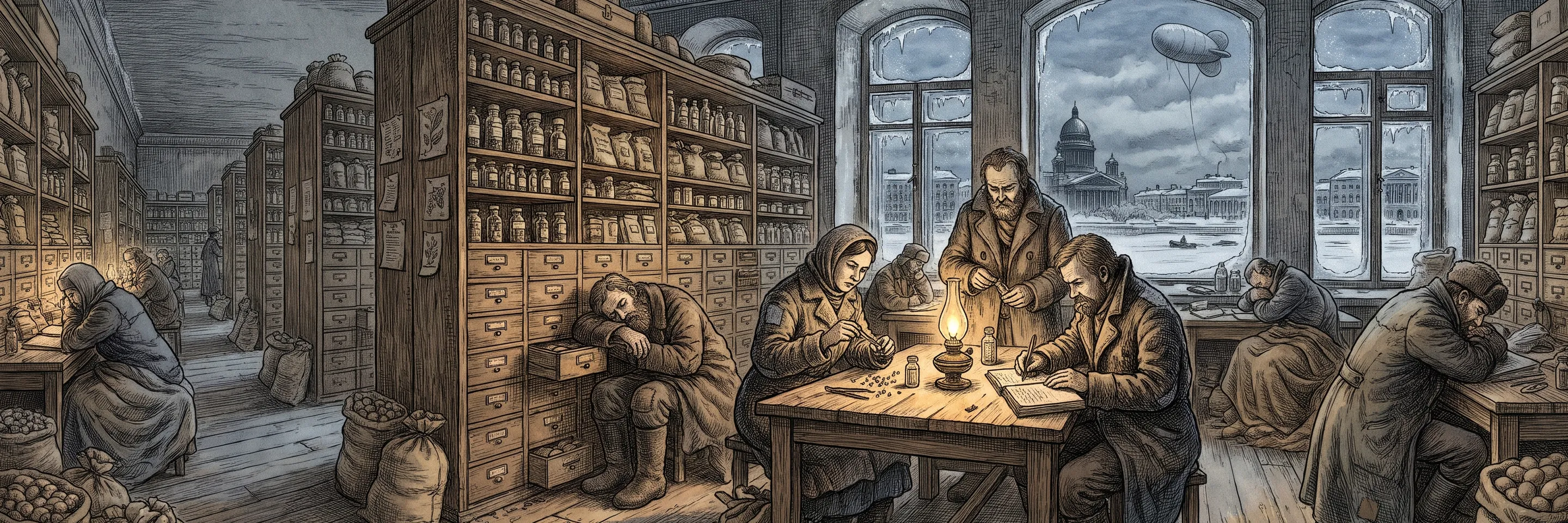
The seed bank in the siege. Through the siege of Leningrad the staff of the Vavilov plant institute guarded its seed collection, and several of them starved at their posts rather than eat it. Full size
Show all 14 videosHide the videos
The siege of Leningrad
 1Leningrad Isolated, Moscow in Hitler's Sights - Eastern Front DOCUMENTARYSeptember 1941: Leningrad is cut off as the drive on Moscow begins.
The siege of Leningrad
 2Hitler Orders City’s Erasure - Zhukov Saves Leningrad - Eastern FrontThe Wehrmacht closes on Leningrad in 1941 and the siege begins.
Alfred and the Vikings
 3Vikings: Battle of Edington 878 - Great Heathen Army DOCUMENTARYAlfred defeats Guthrum's Great Heathen Army at Edington.Series: Vikings in England
Alfred, the burhs and the Danelaw
 4Vikings: War for England - Danelaw DOCUMENTARYAfter Edington, Alfred's burhs held Wessex against new Viking fleets, and his son Edward and daughter Æthelflæd won back the Danelaw.Series: Vikings in England
Alfred and the Vikings
 5The Battle That Saved England - Saxons vs Vikings - Edington 878Edington 878, in the channel's newer full telling.Series: Vikings in England
Alfred and the Vikings
 6Alfred's Reforms Save England - Battle of ButtingtonAlfred's fortified towns, army reforms, schools and translations, and the Viking defeat at Buttington.Series: Vikings in England
Alfred and the Vikings
 7Why Did the Saxons Lose to the Vikings? Medieval Animated DOCUMENTARYWhy the Anglo-Saxon kingdoms failed against the Viking raids and the Great Heathen Army.
The Mongol conquest of Rus
 8Destruction of Kievan Rus - Mongol Conquest DOCUMENTARYBatu's campaigns of 1237 to 1240 and the fall of Kyiv.
Under the Golden Horde
 9How Rus Survived Mongols and Crusaders - Rise of NovgorodNovgorod and Alexander Nevsky between the Mongols and the crusaders.
Under the Golden Horde
 10How the Mongols Lost Russia - Medieval History Animated DOCUMENTARYThe decline of the Golden Horde and the rise of Moscow.
Ukraine under the tsars and Stalin
 11Holodomor - Ukrainians Between Two World WarsUkraine between the wars and the famine of 1932 to 1933.
Chechnya
 12How Russia Lost the First Chechen War - Modern History DOCUMENTARYRussia's failed war in Chechnya, 1994 to 1996.Series: Chechen Wars
Chechnya
 13How Russia Won the Second Chechen War - Modern History DOCUMENTARYRussia's second war in Chechnya from 1999 and the installation of Kadyrov's rule.Series: Chechen Wars
Ukraine under the tsars and Stalin
 14How the Russian Empire Tried to Russify Ukraine DOCUMENTARYTsarist bans on the Ukrainian language and press.
Also on this chapter's history: Is Genghis Khan Ancestor of the Millions? (Chapter 1, no. 5).
Chapter 23
The River Knows No Gate
1 video
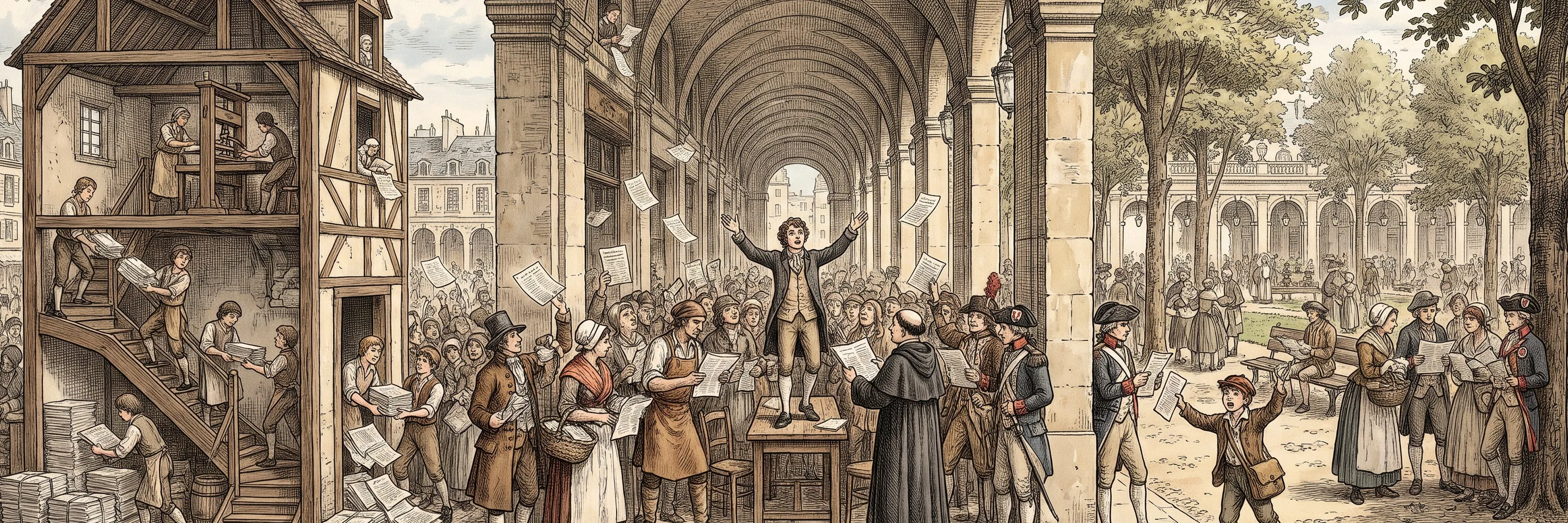
The Palais-Royal, 1789. In July 1789 crowds filled the gardens of the Palais-Royal in Paris to hear speakers and read the pamphlets the presses turned out by the thousand. Full size

Chapter 24
The Dragon We Made Burns Us All
1 video
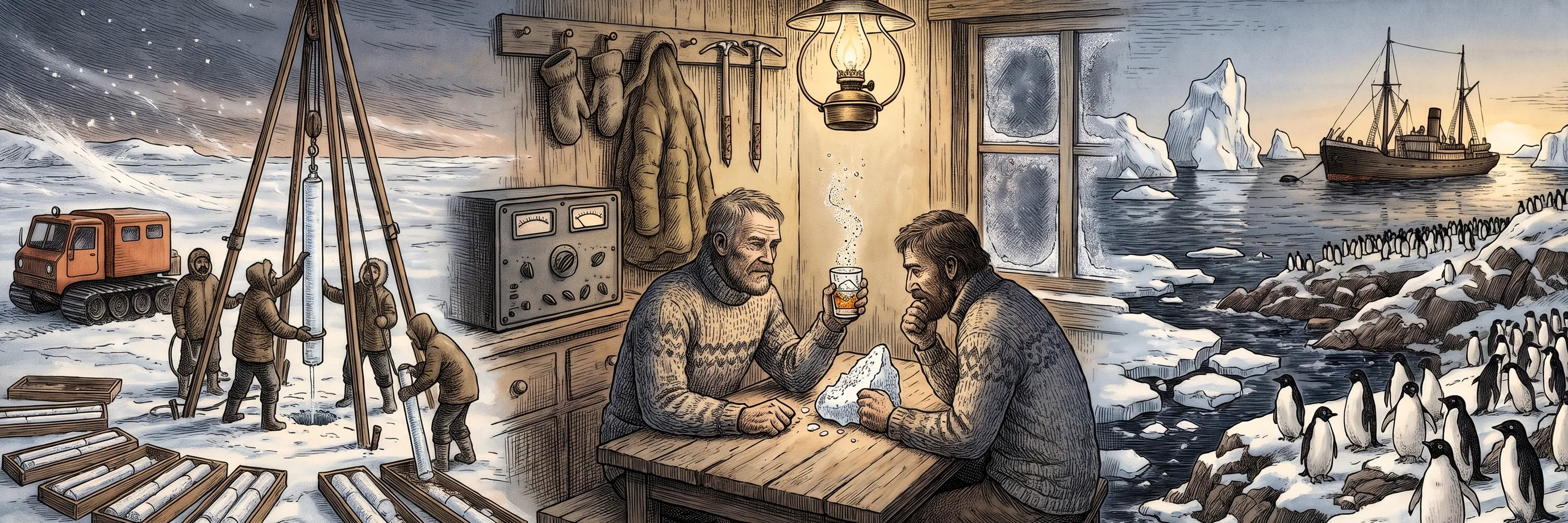
Old air in the glass. In 1965, at the French station at Dumont d'Urville in Antarctica, Claude Lorius dropped a piece of old ice into his whisky and watched the air trapped in it bubble out. By 1987 the ice from Vostok showed the carbon in that air and the world's heat rising and falling together for 160,000 years. Full size
Kings and Generals has no video on this chapter’s machine. The nearest is the ice.
The Arctic, its ice and the oil under it
 1Why the Arctic Matters NowThe melting Arctic and the oil and gas under its ice, the nearest Kings and Generals comes to this chapter’s permafrost and oil.
Chapter 25
A Printing Press in Every Pocket
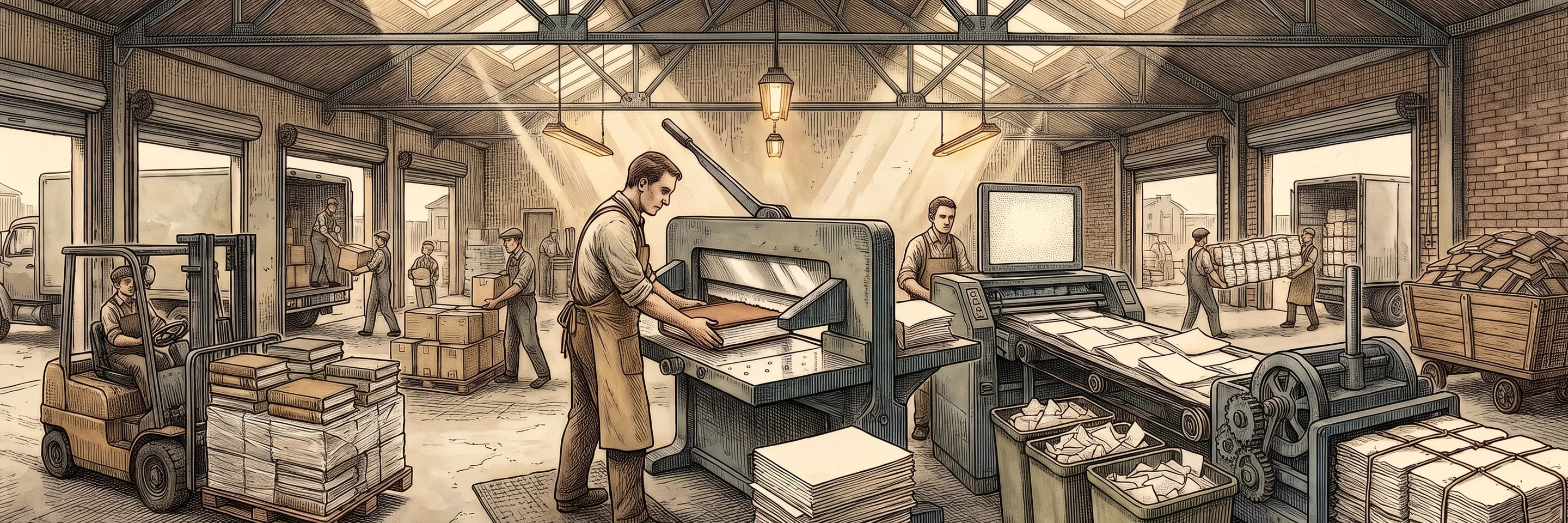
Cutting the spines. Used books bought by the pallet have their spines cut off, their pages scanned on both sides at once, and the paper sent to recycling. The book calls it the burning and the hoarding of the books in the same transaction. Full size
This chapter's history is told in videos placed with other chapters: Medieval Baghdad: Rise and Fall of the City of Peace - DOCUMENTARY (Prologue, no. 2); Islamic Golden Age: Scientific Method DOCUMENTARY (Prologue, no. 3); Islamic Golden Age - Philosophy and Humanities (Chapter 13, no. 6).
Chapter 26
The Dragon That Refuses to Die: Disruption, Division, Drugged and Despised… Yet Hoarding On
5 videos in watch order
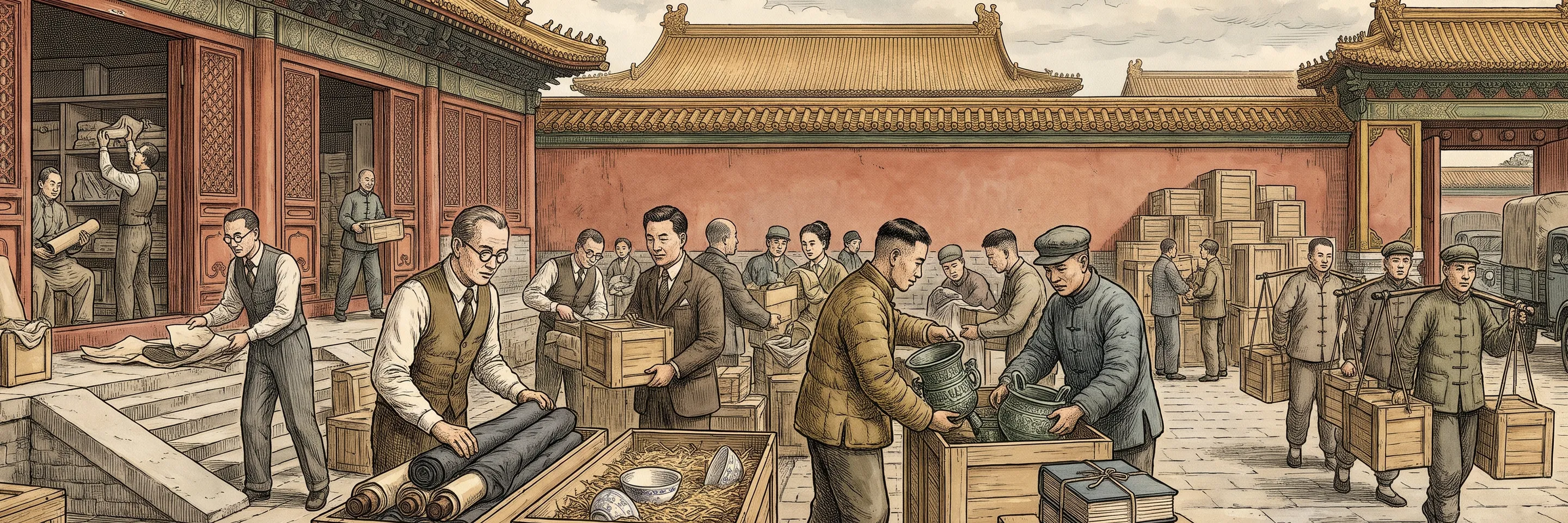
Packing the palace. From 1933 the Palace Museum packed its treasures into crates and moved them ahead of the war. In 1948 and 1949 thousands of those crates were shipped to Taiwan. Full size
The Opium Wars
 1Jardine-Matheson: How Opium Wars Founded Hong KongThe trading house behind the opium trade and the founding of Hong Kong.
The Opium Wars
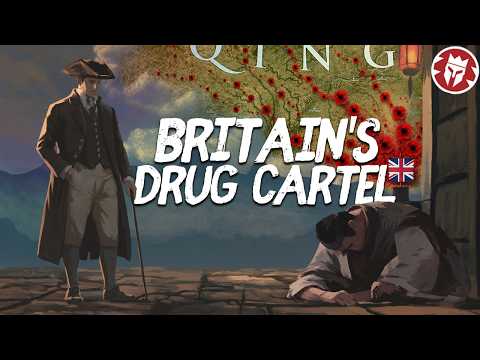 2How a Company Hooked China on Opium - Tea Led to the Opium WarHow the East India Company's tea trade led to opium and war.
War with Japan, 1937
 3China at War - Pacific War #0.5 DOCUMENTARYJapan's invasion of China, from Manchuria to the war of 1937.Series: Pacific War
The Forbidden City and Taiwan
 4What Happened to the Last Emperor of China?Puyi, from the Forbidden City to Manchukuo and the People's Republic.
Taiwan after 1949
 5How Taiwan Became a DemocracyTaiwan's road from martial law to free elections.
Also on this chapter's history: Mongols: Zenith of Empire - Siege of Baghdad 1258 and Battle of Ain Jalut 1260 DOCUMENTARY (Prologue, no. 1); Medieval Baghdad: Rise and Fall of the City of Peace - DOCUMENTARY (Prologue, no. 2); Taiwan's Chip Industry: Success Amid Geopolitical Tensions and AI-Era Prospects (Chapter 17, no. 1).